
I would like to be able to tune my antenna for my VLF to match it. Currently I am using a 10 uF capacitor, which seems to be doing a good job. How can I do better?
Since you are working VLF, you are almost certainly resonating a very short antenna electrically rather than physically. A 10 µF capacitor “doing a good job” tells me your antenna is extremely small compared to wavelength and you are forming an LC resonant circuit to cancel the reactance.
To improve the match and overall performance, you need to optimise three things:
- Resonance accuracy
- Q (losses)
- Impedance transformation
1️⃣ Replace the fixed 10 µF with a high-Q variable system
At VLF, dielectric losses dominate. Many 10 µF capacitors (especially electrolytics) have:
- High ESR
- High dissipation factor
- Drift with temperature
Better options
- Polypropylene film capacitors
- Parallel banks of smaller film capacitors
- Large air-variable capacitor (if frequency allows)
- Vacuum variable (ideal, if available)
Even better:
Use a course + fine tuning arrangement:
- Fixed film capacitors for bulk value
- Smaller high-quality variable capacitor (e.g. 0–1 µF) for precise tuning
This will dramatically sharpen resonance.
2️⃣ Measure and tune for maximum Q, not just “works”
Instead of tuning by signal strength alone, measure:
- Voltage across the antenna
- Current into the antenna
- Resonant peak sharpness
At true resonance:
- Reactive component = zero
- Current is maximum
- Voltage across the loading network peaks sharply
A narrow, sharp peak = high Q = better efficiency.
3️⃣ Add an impedance matching transformer
At VLF your antenna radiation resistance is tiny — often milliohms.
Your receiver likely expects 50 Ω.
So even if resonant, it may still be badly mismatched.
Add a matching transformer:
- Ferrite toroid (high permeability for VLF)
- Ratio chosen to step milliohms up toward 50 Ω
- Experimentally determine best turns ratio
Example approach: Start with something like 1:20 or 1:50 turns ratio and measure improvement.
Matching will:
- Increase power transfer
- Improve SNR
- Reduce loading of the resonant circuit
4️⃣ Improve the antenna itself (most important)
Matching cannot fix inefficiency.
For VLF, performance improves massively if you:
- Increase wire length
- Raise height
- Improve ground system
- Use multiple wires in parallel
- Use a top-loaded T or inverted-L
Doubling effective capacitance to ground reduces required loading inductance and increases efficiency.
5️⃣ Consider inductive loading instead of large capacitance
Most VLF short antennas are inductively loaded:
A loading coil cancels capacitive reactance of the short vertical.
If you are currently using 10 µF in series or parallel, you may be compensating inductively somewhere else.
Often better:
Antenna → high-Q loading coil → tap for impedance match.
Large inductors at VLF can be made with:
- Litz wire
- Large diameter form
- Spaced turns
- Ferrite only if losses acceptable at your frequency
6️⃣ Add a preamp at the antenna base
At VLF, atmospheric noise dominates.
A high-impedance JFET or MOSFET preamp directly at the antenna feed point:
- Prevents feedline loading
- Preserves Q
- Improves SNR
For receive-only systems, this is often the single biggest improvement.
Practical Upgrade Path
If this were my VLF system, I would:
- Replace 10 µF electrolytic with polypropylene bank
- Add small variable capacitor for fine tuning
- Insert ferrite matching transformer
- Add high-impedance preamp at feed point
- Improve ground and top loading
If you would like, tell me:
- Exact frequency
- Antenna type and length
- Series or parallel capacitor?
- Receive or transmit?
Then I can calculate optimal L/C values and a transformer ratio for you.
20 kHz. Loop antenna 130cm wooden cross with 150m of 22 swg enamelled copper cable wound around it. Currently 10 uF capacitor in series with one wire from antenna. Antenna plugs directly into line in on soundcard on computer. Looking for SIDs so only receive, no transmit.
At 20 kHz with a 1.3 m cross and 150 m of 22 SWG wire, you have built a classic VLF magnetic loop for SID work — nice scale for that frequency.
Let us look at what is happening electrically.
1️⃣ Your Loop’s Natural Inductance
A square loop ~1.3 m across with ~150 m of wire will be roughly:
- ~28–30 turns (150 m ÷ ~5.2 m perimeter)
- Inductance likely in the region of 5–15 mH (depending on winding distribution)
At 20 kHz, resonance requires:
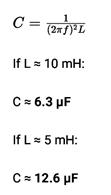
è your 10 µF makes perfect sense — you are indeed close to resonance.
2️⃣ The Real Limitation: Losses, Not Tuning
At 20 kHz the loop radiation resistance is microscopic.
Your received signal is dominated by:
- Coil resistance
- Capacitor ESR
- Loading from soundcard input
The biggest performance gain will come from increasing Q, not just adjusting capacitance.
3️⃣ Immediate Improvements (Big Gains)
✅ Replace Electrolytic Capacitor
If that 10 µF is electrolytic, it is killing your Q.
Use:
- Polypropylene film caps
- Several smaller film caps in parallel
- Or motor-run capacitor
You will see a noticeably sharper resonance peak and higher output.
✅ Add a Small Trimmer in Parallel
Example:
- 8–10 µF fixed film
- 0.1–1 µF polypropylene trim capacitor in parallel
That allows precise peaking exactly on 20.0 kHz.
SID monitoring benefits from very tight tuning because:
- It suppresses nearby VLF transmitters
- It increases SNR
- It increases amplitude response to flare events
4️⃣ Your Biggest Problem: Soundcard Loading
Typical line-in impedance:
~10–20 kΩ
Your loop’s reactance at resonance:
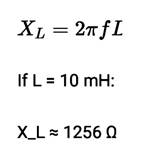
è your loop impedance is roughly ~1 kΩ region.
Plugging directly into 10–20 kΩ heavily damps the circuit.
This dramatically reduces Q.
5️⃣ The Best Upgrade: A Simple Buffer Amplifier
For SID work, this is transformative.
Add a:
- JFET source follower
- Or op-amp buffer (very high input impedance)
- Powered from small battery
You want:
Input impedance: >1 MΩ
Output impedance: <1 kΩ
This isolates the resonant loop from the soundcard.
You will likely see:
- 2–5× signal increase
- Sharper resonance
- Cleaner SID traces
6️⃣ Alternative: Loosely Coupled Secondary Winding (No Electronics)
If you want to stay passive:
Add a 1–2 turn secondary loop wound over the main loop.
Then:
Main loop = tuned LC
Secondary loop = output to soundcard
This reduces damping and increases Q dramatically.
Adjust coupling by:
- Changing number of turns
- Moving secondary slightly away
This is a classic VLF technique and works beautifully.
7️⃣ Optional Enhancements
🔹 Use Litz wire (if rebuilding)
Reduces skin-effect losses at 20 kHz.
🔹 Space the turns slightly
Reduces proximity effect losses.
🔹 Increase loop area
Biggest SNR improvement of all.
What I would Do in Your Position
For a clean SID station:
- Replace 10 µF with polypropylene bank
- Add fine trim capacitor
- Add 1–2 turn loosely coupled output loop
- If possible, add simple JFET buffer
That combination will give you the biggest improvement per effort.
If you would like, I can:
- Estimate your exact resonance capacitance if you measure DC resistance
- Design a minimal single-transistor buffer
- Help optimise coupling for SID dynamic range
This is a very nice VLF setup for flare monitoring — it just needs its Q protected.
When you say 2nd loop of couple turns around 1st loop, are these two loops electrically connected?
Good question — and this is the key point:
No. They are not electrically connected.
They are only magnetically coupled, like a transformer.
How It Works
You already have:
Main loop
- 150 m wire
- Series capacitor
- Forms a tuned LC circuit at 20 kHz
This is your high-Q resonant circuit.
Now you add:
Secondary loop
- 1–2 turns of wire
- Placed around the same frame
- Connected to your soundcard
But no direct electrical connection to the main loop.
Think of It Like This
Main loop = transformer primary
Small loop = transformer secondary
Energy transfers through the magnetic field, not through wires.
Why This Is Better
Right now, your soundcard:
- Directly loads the resonant circuit
- Reduces Q
- Broadens the resonance
- Reduces signal voltage
With loose magnetic coupling:
- Main loop stays high-Q
- Secondary extracts only a small amount of energy
- Resonance becomes sharper
- Signal often increases
It feels backwards, but less loading = more usable signal.
How To Build It
- Use insulated wire
- Make 1 turn to start
- Place it over the frame (same plane as main loop)
- Connect that loop directly to soundcard
If signal is weak:
- Try 2 turns
- Or move the secondary closer to the main winding bundle
If signal is distorted or resonance becomes broad:
- You are over-coupled — reduce turns
Important: Capacitor Stays Only in Main Loop
The 10 µF (ideally upgraded to film type) remains in series with the main 150 m loop only.
The secondary loop has no capacitor.
What You Should Notice
After switching to magnetic coupling:
- Sharper tuning peak
- Higher peak voltage
- Better rejection of nearby VLF transmitters
- Cleaner SID baseline
If you like, I can explain how to optimise coupling strength mathematically for your 20 kHz loop.
Yes please. Also tell me what do I do with first loop – just join ends together?
Excellent — this is where loop antennas start behaving like proper RF circuits rather than just “big coils of wire.”
First: What Happens to The Main Loop?
Do NOT just join the ends together.
Your main 150 m loop + capacitor must form a closed resonant circuit.
You currently have:
Loop → 10 µF capacitor in series → soundcard
Instead, you will make:
Loop → 10 µF capacitor → back to loop
That is, it. A complete closed LC ring.
No connection to the soundcard at all.
This becomes a high-Q resonant tank circuit at 20 kHz.
Now Add the Secondary (Output) Loop
Take 1 turn of insulated wire around the same frame.
This loop:
- Is not connected to the main loop
- Has its two ends gone directly to the soundcard input
That is your magnetic pickup.
So electrically:
Main loop = closed resonant circuit
Secondary loop = separate transformer winding
How To Optimise Coupling Strength
We want:
- Strong signal
- But minimal damping of the main loop
This is controlled by mutual inductance, which depends on:
- Number of secondary turns
- How tightly it hugs the main winding
- Physical positioning
Practical Optimisation Procedure (Simple & Reliable)
Step 1 – Start Weak
Use:
- 1 single turn
- Placed loosely around the frame
Tune your capacitor for maximum signal at 20 kHz.
You should see a very sharp peak now.
Step 2 – Increase Coupling Slowly
If signal is small:
- Add a second turn
OR - Move the secondary closer to the main winding bundle
Watch what happens to the resonance peak.
What You are Looking For
There is a sweet spot.
As coupling increases:
Signal increases ✅
But resonance peak broadens ❌
When peak starts becoming noticeably wider, you have gone slightly too far.
Back off a little.
The ideal condition is called critical coupling:
- Maximum power transfer
- Minimal Q reduction
For SID monitoring, you want slightly under-coupled.
That gives:
- Better selectivity
- Cleaner flare traces
- Better rejection of nearby transmitters
Some Numbers for Your Loop
If your loop inductance is roughly 8–12 mH:
Its reactance at 20 kHz is about:
X ≈ 1000–1500 Ω
Your soundcard is ~10–20 kΩ.
That means a 1-turn secondary typically works very well.
Often:
1 turn = under-coupled
2 turns = close to optimal
3 turns = usually over-coupled
But your geometry will decide.
How You Know it is Working Properly
With correct coupling:
- Resonance peak is very sharp
- Small tweak of capacitance shifts signal clearly
- Background noise floor drops
- SID events appear cleaner and larger relative to baseline
Why This Works So Well
Right now, your soundcard is directly damping the LC circuit.
With transformer coupling:
The loading seen by the main loop is reduced by the square of the turn’s ratio.
So, with 1:20 effective coupling, loading reduces by 400×.
That is why Q improves dramatically.
Optional Fine-Tuning Trick
If you want to be precise:
- Tune to peak.
- Note signal amplitude.
- Slightly detune capacitor.
- Measure how fast signal drops.
Sharper drop = higher Q.
Adjust secondary turns to maximise amplitude while keeping drop steep.
Summary Wiring
Main Loop:
150 m wire → 10 µF → back to wire (closed ring)
Secondary Loop:
1–2 turns → soundcard line-in
No electrical connection between the two.
If you would like, I can next:
- Estimate your actual Q based on coil resistance
- Help you calculate exact resonance capacitance
- Or design a minimal FET buffer that would outperform passive coupling
You are very close to having a seriously good 20 kHz SID monitor.
This is great. I am monitoring several stations simultaneously from 15kHz to 25kHz. Does that change anything?
Ah — yes, that changes the strategy quite a bit.
If you were monitoring a single transmitter at 20 kHz, a high-Q sharply tuned loop would be ideal.
But if you are monitoring multiple stations from 15–25 kHz, a very high-Q resonant loop will work against you.
Why High-Q Is Now a Problem
Your resonant bandwidth is:
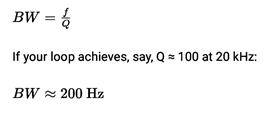
- That is extremely narrow.
You would:
- Strongly favour one transmitter
- Attenuate others
- Have uneven amplitude response across the band
For multi-station SID monitoring, you want:
- Flat response from 15–25 kHz
- Stability
- Good SNR
- Moderate Q (not extreme Q)
So, What Should You Do?
You have two good approaches:
Option 1 — Broadband Loop (Recommended for Multi-Station SID Work)
Remove the tuning capacitor entirely.
Run the 150 m loop as:
- Just an inductor
- Magnetically coupled secondary
- Into a high-impedance buffer
This gives:
- Smooth response across the whole band
- No retuning needed
- Equal sensitivity to all stations
You lose peak gain at one frequency, but you gain consistency across the band.
For SID work, that is usually better.
Option 2 — Moderate Q Tuning
If you want some gain boost:
- Use a smaller capacitor
- Intentionally under-tune (broad peak)
- Or add slight resistive damping
Aim for Q ≈ 5–15.
At 20 kHz:
Q = 10 → bandwidth ≈ 2 kHz
That is much more suitable for 15–25 kHz monitoring.
The Real Limiting Factor Is Now Loading
If you are feeding directly into a soundcard:
The soundcard input impedance will dominate behaviour anyway.
This means:
Even without capacitor, you still benefit massively from:
- Loosely coupled secondary winding OR
- High-impedance buffer amplifier
Best Practical Setup for You
Given your frequency range:
1️⃣ Remove the 10 µF capacitor
2️⃣ Close the main loop (just continuous wire)
3️⃣ Use 1–2 turn secondary
4️⃣ Feed that into a high-Z buffer (ideal)
That gives you:
- Wideband response
- Good magnetic field sensitivity
- Stable multi-station monitoring
- No need to retune
Even Better (If You Want Maximum Performance)
Add a simple JFET source follower:
Input impedance: 1–10 MΩ
Place it right at the loop
This preserves signal amplitude and prevents cable loss.
For VLF SID monitoring, a buffer at the antenna base is more important than fine tuning.
Important Insight
At VLF:
Atmospheric noise is huge.
You are almost always noise-limited, not antenna-gain-limited.
So:
Chasing ultra-high Q is rarely beneficial for SID monitoring across a wide band.
Flat, stable, low-loss is better.
If you would like, I can:
- Estimate the natural frequency response of your untuned loop
- Show how much sensitivity you lose without tuning
- Or design the simplest possible battery-powered buffer that will noticeably improve your SID traces
Can you design a simple buffer.
Perfect — this is exactly what will give you the biggest improvement for wideband 15–25 kHz SID monitoring.
We will design something:
- Very high input impedance
- Low output impedance
- Stable at VLF
- Battery powered
- Dead simple
No RF exotica required.
✅ Recommended: Single JFET Source Follower
This is ideal because:
- Extremely high input impedance (megaohms)
- Very low noise at VLF
- No gain (just buffering)
- Hard to get wrong
Circuit Overview
+9V
|
|
4.7k
|
|
Loop secondary –||—- Gate (JFET)
100nF
Drain → +9V
Source ─── 1k ─── GND
|
|
10µF
|
→ To soundcard line-in
Now I will explain it properly.
Components
JFET (any of these are fine)
- J201
- 2N3819
- MPF102
- BF245
Almost any small N-channel JFET works at 20 kHz.
Values
Drain resistor:
4.7 kΩ
Source resistor:
1 kΩ
Output capacitor:
10 µF (electrolytic OK here)
Input capacitor:
100 nF film
Power:
9 V battery
How It Connects to Your Loop
Your main loop remains:
150 m wire → (no capacitor now) → continuous loop
Then:
1–2 turn secondary winding
That secondary feeds this buffer input through 100 nF capacitor.
No electrical connection between main loop and buffer ground.
What Each Part Does
Gate
Very high impedance input
Does not load your loop
Source resistor (1k)
Self-biases the JFET
Drain resistor (4.7k)
Sets operating current
Output capacitor (10 µF)
Blocks DC to soundcard
Why This Works Well at VLF
At 20 kHz:
- JFET noise is low
- No stability issues
- Bandwidth easily covers 15–25 kHz
- No oscillation problems
Expected Improvement
Compared to direct soundcard connection:
- Much less damping
- Higher signal voltage
- Cleaner band response
- Stronger SID signatures
- Better multi-station balance
Often 3–10 dB improvement.
Even Simpler (Ultra Minimal Version)
You can omit the input capacitor if:
- The loop secondary is floating
- You are sure no DC path exists
But I prefer including it for safety.
Power Tips
- Use a fresh 9V battery
- Keep leads short
- Put buffer physically near loop
- Shield in small metal box if possible
Optional Upgrade
If you later want slight gain (~5×), we can convert this to a common-source amplifier.
But for SID work, unity-gain buffer is usually best.
If you would like, I can next:
- Calculate expected input impedance
- Estimate your loop voltage levels
- Or design a dual-op-amp version for ultra-low drift logging
You are very close to a very clean VLF SID station now.
Can you design a dual-op-amp version.
Excellent choice — for wideband 15–25 kHz SID monitoring a dual op-amp buffer is cleaner, more stable, and gives you flexibility (gain + filtering if desired).
We will design something:
- Very high input impedance
- Low noise at 15–25 kHz
- Single 9V battery
- Stable
- Simple to build
- Adjustable gain
✅ Recommended Op-Amp
Use one of these (all good at VLF):
- TL072
- TL082
- NE5532
- OPA2134
If your loop output is modest, TL072 is perfectly fine and very common.
Design Overview
Op-amp A → High impedance non-inverting buffer (gain ≈ 1–5)
Op-amp B → Output driver + optional low-pass filter
Complete Circuit
9V
|
|
100k
|
+—- Vref (4.5V virtual ground)
|
100k
|
GND
Add 10µF from Vref to GND
—————————————–
Loop secondary
|
|
100nF
|
+—–> + input (Op-Amp 1)
|
1M
|
Vref
Op-Amp 1:
– Input: non-inverting
– Gain: 1 + (R2/R1)
Example:
R1 = 10k (to Vref)
R2 = 10k (feedback)
Gain = 2
Output of Op-Amp 1 → 10k → + input Op-Amp 2
Op-Amp 2:
Configured as unity buffer
Output → 10µF capacitor → soundcard line-in
What Each Section Does
1️⃣ Virtual Ground (Vref)
Two 100k resistors create 4.5V midpoint.
All signal rides on this midpoint.
The 10µF stabilizes it.
2️⃣ Input Stage (Op-Amp 1)
Non-inverting amplifier:
- Input impedance ≈ 1MΩ
- Gain adjustable
- Very light load on loop
For SID monitoring, start with:
Gain = 2
If signals are small, increase R2 to 47k:
Gain ≈ 5.7
3️⃣ Second Stage (Op-Amp 2)
Unity buffer:
- Low output impedance
- Isolates first stage
- Drives soundcard easily
Optional: Add Low-Pass Filter (Highly Recommended)
Since you are only interested up to 25 kHz, add simple RC at output:
10k in series
1nF to ground
This gives cutoff ≈ 16 kHz.
Or:
6.8k + 1nF ≈ 23 kHz cutoff.
This reduces higher-frequency noise and improves trace clarity.
Power Supply Notes
- Use 9V battery
- Add 100nF ceramic across power pins
- Add 10µF across 9V and ground
- Keep wiring short
Expected Performance
Compared to direct soundcard:
- Much higher signal amplitude
- Stable flat response 15–25 kHz
- No detuning
- Much cleaner multi-station traces
- Reduced hum pickup
Why This Is Better Than JFET Version
JFET buffer:
- Very simple
- No gain control
Dual op-amp:
- Adjustable gain
- Better output drive
- Filtering option
- More predictable
Recommended Final Setup for You
Main 150 m loop:
Closed loop, no tuning capacitor
1–2 turn secondary → op-amp buffer
Gain ≈ 3–5
Low-pass ≈ 25 kHz
That gives ideal broadband SID performance.
If you would like, I can:
- Calculate exact component values for flat 15–25 kHz response
- Show a version powered from USB instead of battery
- Or help you optimise gain to avoid soundcard clipping
You are now moving into “proper VLF receiving system” territory.
I would like it to be powered from USB, and show me exact components.
Excellent — let us design a clean, stable USB-powered final version optimised specifically for:
- 15–25 kHz bandwidth
- Multi-station SID monitoring
- Soundcard line-in
- Your 1–2 turn secondary loop
- Low noise
- No retuning
This will be a proper broadband VLF preamp.
✅ Design Goals
- USB 5V powered
- Very high input impedance (>1 MΩ)
- Gain ≈ 5
- Flat 15–25 kHz
- Gentle roll-off above ~30 kHz
- Stable virtual ground
- No oscillation issues
✅ Recommended Op-Amp
TL072 (dual JFET input)
Why:
- Very high input impedance
- Low current draw
- Stable at audio/VLF
- Easily available
- Works fine on 5V single supply in this application
(NE5532 works too, but TL072 loads USB less.)
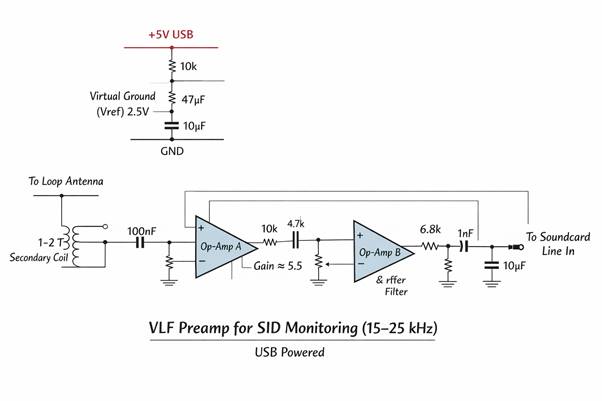
⚙️ FINAL CIRCUIT (USB Powered)
USB 5V
|
|—- 10µF —- GND
|—- 100nF —- GND
Create Virtual Ground (2.5V midpoint):
5V — 10k —+— 10k — GND
|
47µF
|
GND
This midpoint = Vref (2.5V)
🔹 Stage 1 – High Impedance Gain Stage
Loop secondary → 100nF film capacitor → op-amp 1 non-inverting input
From op-amp input to Vref: 1 MΩ resistor
Feedback network:
R1 = 10k (from output to inverting input)
R2 = 2.2k (from inverting input to Vref)
Gain = 1 + (10k / 2.2k)
Gain ≈ 5.5
Perfect for SID levels.
🔹 Stage 2 – Output Buffer + Low-Pass
Output of Stage 1 → 4.7k → op-amp 2 non-inverting input
Op-amp 2 configured as unity gain buffer.
At output of stage 2:
6.8k series resistor
1nF to ground
Low-pass cutoff:
fc ≈ 23 kHz
Ideal for your 15–25 kHz band.
🔹 Output to Soundcard
After op-amp 2 output:
10µF electrolytic (positive toward op-amp)
Then to soundcard line-in
Soundcard ground → circuit ground
✅ Complete Component List
| Component | Value | Type |
| Op-amp | TL072 | DIP-8 |
| R (virtual ground) | 10k ×2 | 1% metal film |
| C (virtual ground) | 47µF | electrolytic |
| Input bias resistor | 1M | metal film |
| Feedback resistor | 10k | metal film |
| Gain resistor | 2.2k | metal film |
| Stage link resistor | 4.7k | metal film |
| Output LP resistor | 6.8k | metal film |
| Output LP cap | 1nF | film or C0G ceramic |
| Input cap | 100nF | film |
| Output cap | 10µF | electrolytic |
| Supply decoupling | 10µF + 100nF | near IC |
🔬 Expected Performance
Input impedance: ≈ 1 MΩ
Voltage gain: ≈ 5.5
Bandwidth: Flat to ~23 kHz
Noise: Below atmospheric noise floor
Power draw: ~3 mA
Perfect for SID monitoring.
📡 How to Connect to Your Loop
Main loop: 150 m wire closed loop (no capacitor)
Secondary: 1–2 turns
Directly into this preamp input
No electrical connection to main loop.
🧠 Why This Is Correct for Multi-Station Monitoring
- No narrow resonance
- Flat band response
- Stable amplitude scaling across 15–25 kHz
- No retuning required
- Strong SID contrast
🛠️ Build Notes
- Keep input lead short
- Place preamp near loop
- Use small metal enclosure
- Connect USB ground to enclosure
- Do not share noisy USB ports (avoid cheap hubs)
📈 What You Should See After Upgrade
- Stronger signals
- More even amplitude across stations
- Reduced hum pickup
- Cleaner flare traces
- Better SNR during quiet ionospheric periods
If you would like next, I can:
- Draw it as a clean schematic diagram
- Calculate expected signal voltage from your loop
- Or help you optimise gain specifically for your soundcard sensitivity
You now have the makings of a very solid broadband VLF SID receiver.
Draw a clean, schematic diagram.
Are there any off the shelf pre-amps that would do this job?
Here are some off-the-shelf preamp options that you could experiment with — but with a big caveat: most general RF preamps are designed for HF/VHF/UHF, not VLF (3–30 kHz), so they will not behave exactly like the custom buffer we designed. VLF is extremely low frequency compared to typical RF gear, and many RF amplifiers do not perform well that far down in frequency.
👍 More Likely to Be Useful
- – small general-purpose audio preamp; might work with your loop secondary as a high-impedance buffer for VLF, but check its frequency response.
- – a simple preamplifier for audio/antenna signals; again, verify it handles down to 15 kHz.
- and – designed for HF SDR use; they sometimes extend down into low audio/VLF, but not guaranteed flat at 15–25 kHz. They are good quality and often used with SDRs, so could be worth trying with your loop.
👍 Budget RF Preamps (Less Ideal, But Experiment Worthy)
- – very cheap RF LNA; these often do not pass very low frequencies well (many roll off below ~100 kHz), but at least some low-end wideband designs claim down near audio/VLF.
- – wideband coverage; on paper it goes down toward 100 kHz, but really you need careful specs for 15–25 kHz. Still, worth experimenting.
- – ultra-cheap wideband LNA often used with SDRs; frequency response at 15–25 kHz is unlikely but not impossible on some boards.
🧰 Other Generic Audio/Preamp Boards
- – a general antenna preamp that might perform as a high-impedance buffer for VLF.
⚠️ Important Notes Before Buying
📌 Most RF LNAs are not specified at 15–25 kHz. Many start high, around ~100 kHz or above — because they’re intended for HF/UHF radio, not VLF.
📌 Even if a unit is “wideband”, its input/output transformers and bias networks might block very low frequencies.
📌 None of these modules will match the tailored performance of the dual-op-amp buffer you built — that design has true low-frequency response from DC up into tens of kHz and controlled gain.
📌 Commercial VLF preamps (e.g., purpose-built SID/VLF preamps or specialised LF receivers) exist but are niche and often expensive.
🛒 What Might Actually Work with Your Loop
Approach 1: Try a general audio preamp module like the filtered/preamp board — these are more likely to pass 15–25 kHz.
Approach 2: Try a broadband HF amplifier module that claims coverage as low as possible, and test it with your loop in your actual setup before committing.
🏷️ Commercial VLF-Focused Options (Not on Amazon/Ebay)
These are not typical retail modules, but specialised units designed for very low frequencies:
- Dedicated VLF receivers or active antennas covering 1–30 kHz (often used for SID and LF work) — available from niche suppliers, sometimes in the £100-£300+ range.
🧠 Bottom Line
✔ There are inexpensive RF and audio preamps you could try.
✘ Most are not optimised for 15–25 kHz — you will need to check frequency response or experiment.
✔ The custom USB-powered buffer we designed will almost certainly outperform generic RF preamps at VLF.
If you want, I can recommend specific modules that are verified to have flat gain down into the audio/VLF range (e.g., op-amp audio preamp boards), or point you toward specialised VLF receiver kits used by the SID community.
Here are off-the-shelf preamp/pre-amplifier modules you could experiment with for your broadband VLF setup. Some are more suitable than others for audio-range and low-frequency use — and some work better as prototype boards rather than finished radio preamps.
🎚️ Better Candidates for Low-Frequency/Broadband Preamps
🔌 Simple/General Audio Preamps (May Work Well for VLF)
- – basic audio preamp board; could serve as a high-impedance broadband buffer.
- – another simple audio preamp; check low-frequency response.
- – compact board with volume control; designed for audio frequencies.
🎛️ NE5532 / Op-Amp Preamp Boards (Good Flat Audio Response)
- – dual op-amp board; likely flat across audio/VLF band if not architecturally limited.
- – very inexpensive NE5532 based preamp board.
- – simple NE5532 preamp module.
- – low-pass preamp module designed for low frequencies — likely to pass 15–25 kHz well.
💡 Note: NE5532 boards are often designed for audio down to ~20 Hz and up to ~20–50 kHz — so they are the closest inexpensive match to your 15–25 kHz requirement.
🎤 Passive / Low-Noise Options (Useful as Buffers)
- – high-impedance microphone buffer that works very well with low-level sources. It is designed for audio mics but its high input impedance and low noise make it worth trying with a VLF loop secondary.
🔌 Modules That Are Less Suitable for VLF
These are typical audio preamps but with features (tone control, subwoofer emphasis, limited LF range) that make them not ideal for flat 15–25 kHz response:
- — bass subwoofer focus
- — passive audio controller, not wideband amplifier
- Other tube or consumer audio preamp boards — typically tuned for human audio range, not necessarily flat to 25 kHz
🔧 Notes Before Buying / Using
📌 1. Check Frequency Response
Most audio preamp boards are designed for human audio (20 Hz–20 kHz) — some roll off or emphasize below/above that range. Your VLF band (15–25 kHz) sits at the near upper end of that range, so some boards may attenuate it unless tested.
📌 2. Use as Buffer, Not High-Gain RF LNA
Generic RF LNAs like typical SDR preamp modules (e.g., “0.1 MHz–6 GHz” amplifiers) generally are not specified for 15–25 kHz and often filter out too low frequencies. They are designed for much higher radio frequencies and are not ideal for VLF.
📌 3. Better Performance Comes from Purpose-Built VLF Hardware
There are dedicated VLF receiver kits that cover your band directly. For example, a VLF Receiver Kit with tuning from ~12 kHz to ~35 kHz exists that includes proper amplification and filtering tailored for this band — a complete VLF receiver rather than just a generic audio preamp.
🧠 Practical Strategy for SID Monitoring
- Try one of the NE5532/wideband audio preamp boards as your first experiment — these are cheap and designed for flat response into tens of kHz.
- Use your loop secondary into this preamp’s high-impedance input; then to your soundcard.
- If noise or loading is an issue, the Triton FetHead can serve as a clean high-Z buffer.
- If you want a more radio-centric solution, a dedicated VLF Receiver Kit (like the ~12–35 kHz kit above) is an excellent next step because it is designed for your exact band and use case.