
All available on https://www.tindie.com/search/?q=hydrogen or direct from https://gpio.com/
GPIO Labs are now offering a range of hydrogen line products:
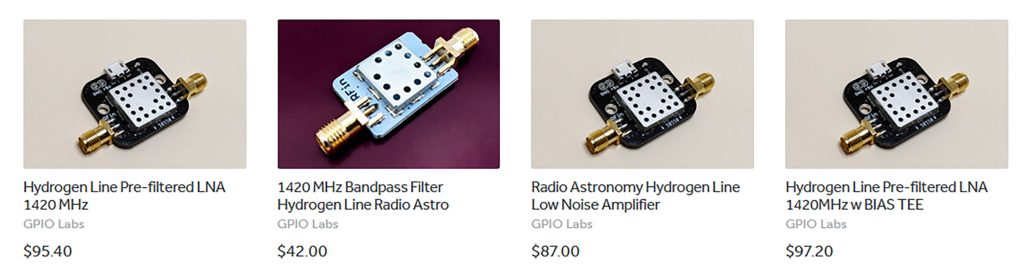
1420 MHz Bandpass Hydrogen Line Filter:
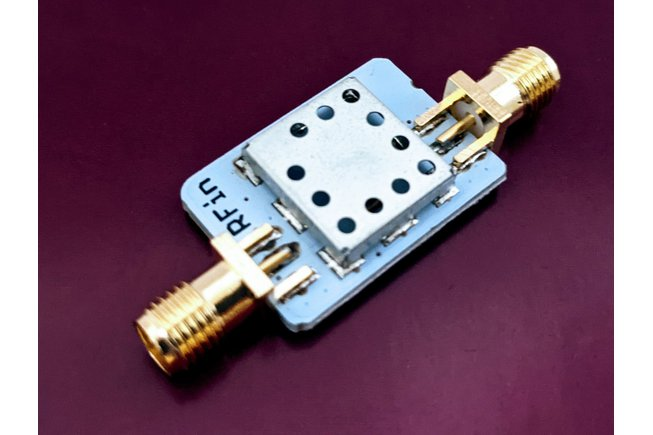
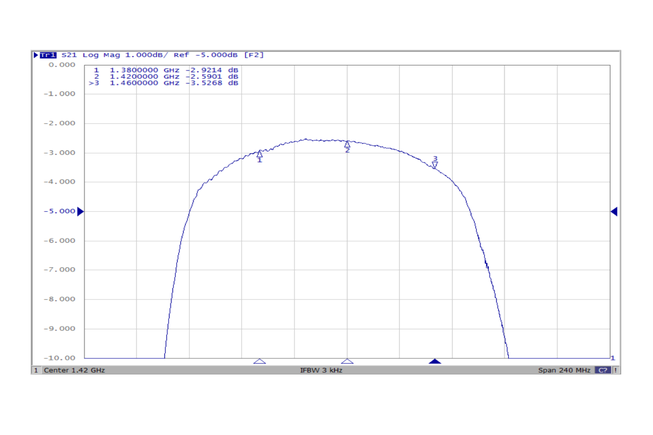
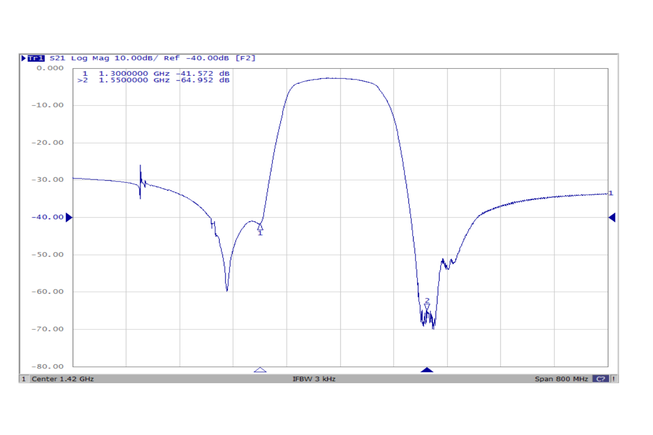
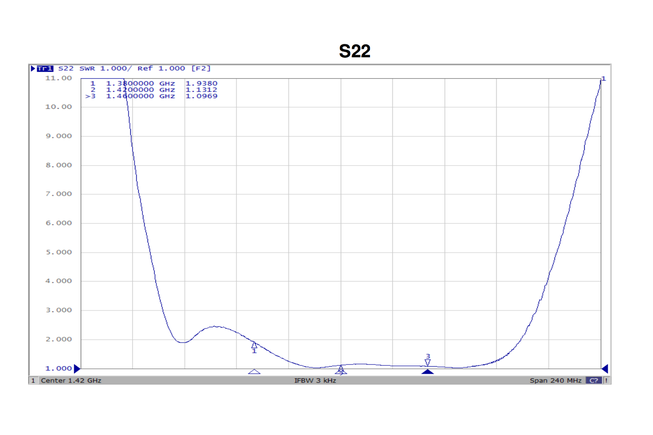
This was the original version, and is designed to be a small, cost-effective band pass filter centered at 1420 MHz with a typical insertion loss of 3 dB in the pass band. It does not have a case, unlike the Nooelec SAWBird H1 LNA and filter. The filter also provides power handling of up to a maximum +10 dBm and has an operating temperature range of -40C to +85C.
APPLICATIONS
• Hydrogen Line experiments at 1420 MHz
Applying a DC voltage to either the input or output will damage the filter
SPECIFICATIONS
Passband
1420 +/- 25 MHz
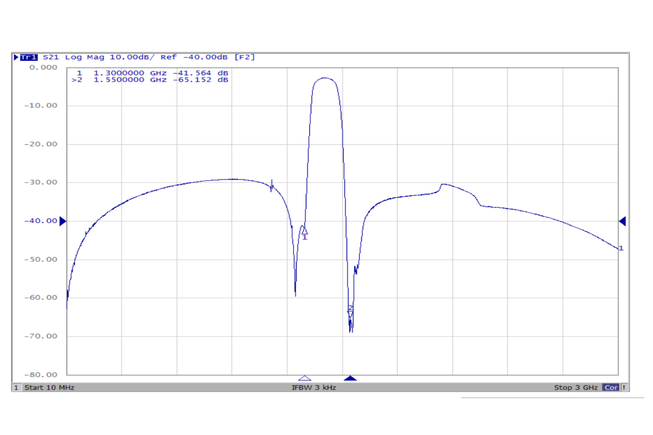
Frequency ——— Minimum Attenuation
1300 MHz ——— 24 dB
1600 MHz ——— 24 dB
The filter uses SMA-F PCB edge mount connectors
Radio Astronomy Hydrogen Line Low Noise Amplifier
This is a Low Noise Amplifier operating at 1420 MHz with 30+ dB of Gain and < 1 dB Noise Figure for Hydrogen Line Experiments
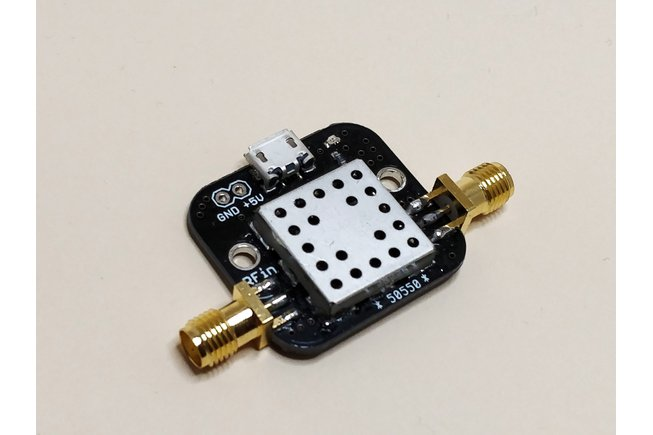
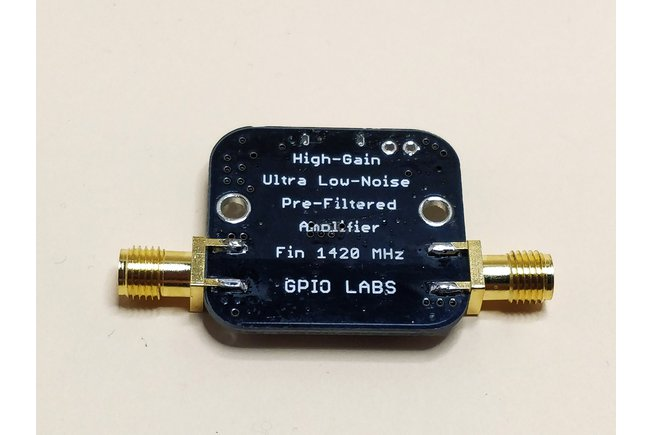
This module can be powered using a micro-USB cable. A two pin header pad is also provided so that a DC supply ranging from +5V to +12V can be used instead to power the LNA.
Please note that this version of the product does not have a built-in Bias Tee. A separate filter is discussed below, that does have a bias tee.
FEATURES
• Pre-filtered LNA operates at 1420 MHz for Hydrogen Line experiments
• USB-powered with two-pin header pads for optional DC power
• The Noise Figure is typically around 1 dB, with a noise temperature 91 +/- 2 Kelvin.
• PCB edge-mount connectors are SMA-F.
SPECIFICATIONS
Frequency ——— Gain
500 MHz ——— 8 dB
1000 MHz ——— 10 dB
1200 MHz ——— 8 dB
1300 MHz ——— 24 dB
1420 MHz ——— 32 dB
1500 GHz ——— 31.5 dB
1800 MHz ——— 19 dB
2000 MHz ——— 6 dB
2400 MHz ——— 3 dB
Maximum RF Input Power
-10 dBm
DC supply range
+5 V to +12 V
Hydrogen Line Pre-filtered LNA 1420 MHz
Hydrogen Line Pre-filtered Low Noise Amplifier 1420 MHz with 32 dB Gain LNA.
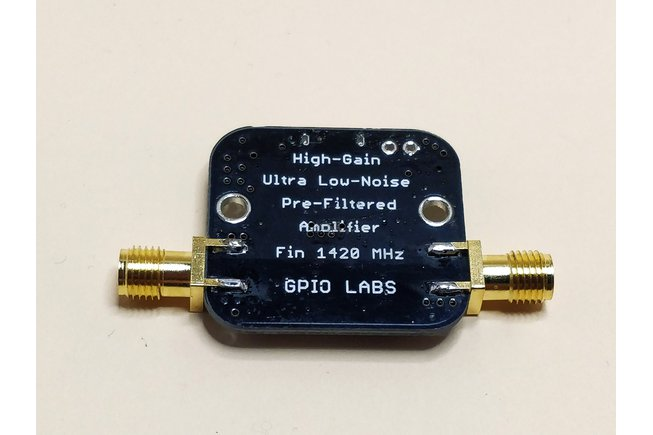
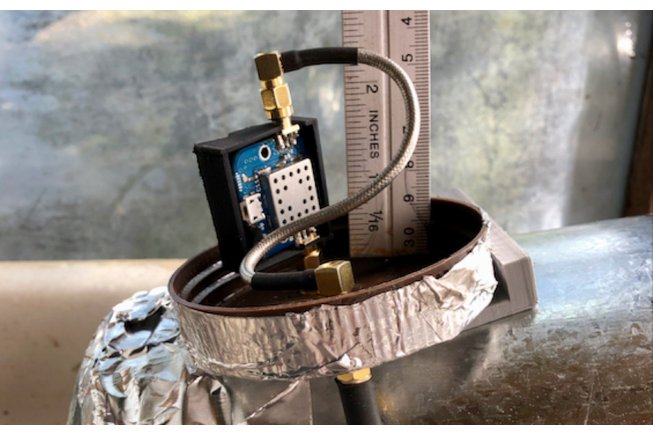
This is a 1420 MHz pre-filtered low noise amplifier for Hydrogen Line measurements that can be powered using a micro-USB cable. A two pin header pad is also provided so that a DC supply ranging from +5V to +12V can be used instead to power the LNA.
Please note that this version of the product does not have a built-in Bias Tee. A separate filter is discussed below, that does have a bias tee.
FEATURES
• Pre-filtered LNA operates at 1420 MHz for Hydrogen Line experiments
• USB-powered with two-pin header pads for optional DC power
• 1 dB Noise Figure
• PCB edge-mount connectors are SMA-F.
SPECIFICATIONS
Frequency ——— Gain
500 MHz ——— 8 dB
1000 MHz ——— 10 dB
1200 MHz ——— 8 dB
1300 MHz ——— 24 dB
1420 MHz ——— 32 dB
1500 GHz ——— 31.5 dB
1800 MHz ——— 19 dB
2000 MHz ——— 6 dB
2400 MHz ——— 3 dB
Maximum RF Input Power
-10 dBm
DC supply range
+5 V to +12 V
Hydrogen Line Pre-filtered LNA 1420MHz w BIAS TEE
Hydrogen Line Pre-filtered Low Noise Amplifier 1420 MHz LNA 34 dB with BIAS TEE.
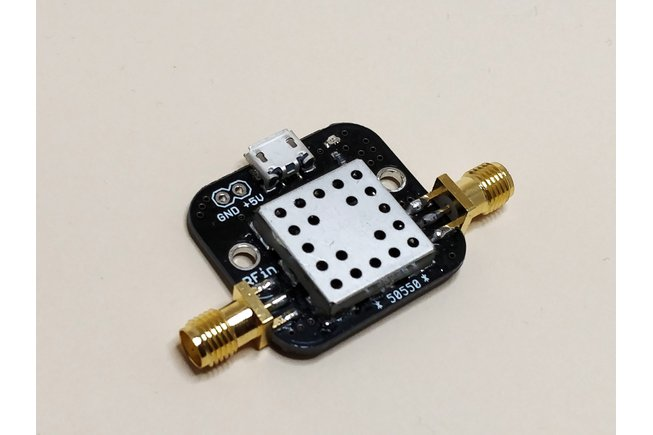
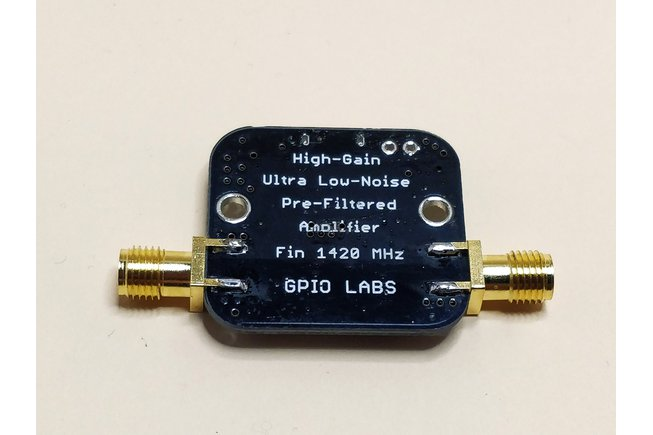
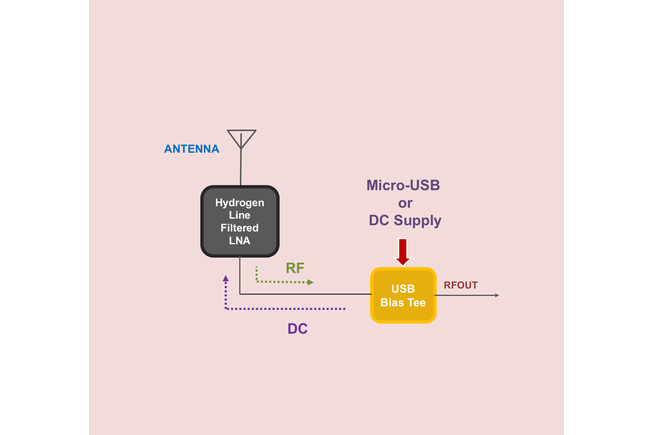
This is a 1420 MHz pre-filtered low noise amplifier for Hydrogen Line measurements that has a Bias Tee installed on the output so it can also be powered with a DC supply over the RF cable provided by the receiver. It can also be powered using a micro-USB cable. A two pin header pad is also provided so that a DC supply ranging from +5V to +12V can be used instead to power the LNA.
Please note the following precaution since the Bias Tee is installed. When powering the device using either the DC header or the USB connector, +5 VDC will appear on the RF output. If your receiver does not have a DC blocking capacitor on its input or some other form of DC voltage protection, this voltage risks damage your receiver, and hence it is recommended that you use a DC block between this device and the software defined radio receiver.
FEATURES
• Pre-filtered LNA operates at 1420 MHz for Hydrogen Line experiments
• USB-powered with two-pin header pads for optional DC power
• 1 dB Noise Figure
• PCB edge-mount connectors are SMA-F
• Includes Bias Tee on the output.
SPECIFICATIONS
FREQUENCY (MHz) —– GAIN (dB)
100 —-> -23
200 —-> -9
300 —-> -2
400 —-> 0
500 —-> 3
1000 —-> 9
1200 —-> 35
1300 —-> 35
1420 —-> 34
1500 —-> 33
1800 —-> 21
2000 —-> -15
2400 —-> -5
Maximum RF Input Power
-10 dBm
DC supply range
+5 V to +12 V
BIAS TEE Note
Please note that this module has a Bias Tee on the output. If it is powered using the DC header or USB connector, there will be a DC voltage present on the Output of at least +5 V. If your receiver cannot tolerate DC, you will need to use a blocking capacitor between the output of this module and the input of your receiver.
When powering this module using a Software-defined radio or receiver that has a Bias Tee, you can check the voltage on the Header using a multimeter. Please ensure that it is at least +5V DC and it should not exceed +12 VDC. Exceeding this max will damage the device. Supplying less than +5V DC will result in unreliable or no amplification.