Hi Andy,
I wanted to pass along an operational caution about the FE‑5650A that may not be obvious from normal bench testing. This particular rubidium unit dissipates a very large amount of heat during warm‑up—typically 20–30 W—and relies on being mounted to a metal chassis or heat‑sinking structure to keep the physics package within its safe thermal envelope. When run on an open bench without proper heat sinking, the heater subsystem can remain at maximum drive for an extended period, causing the internal lamp, cavity, and control electronics to run significantly hotter than intended. Over time this can lead to premature aging, frequency drift, or even permanent damage to the physics package. For anyone powering one of these units outside its original enclosure, it’s important to ensure good thermal conduction to a solid heat sink or provide forced airflow so the device doesn’t overheat during the first several minutes of operation.
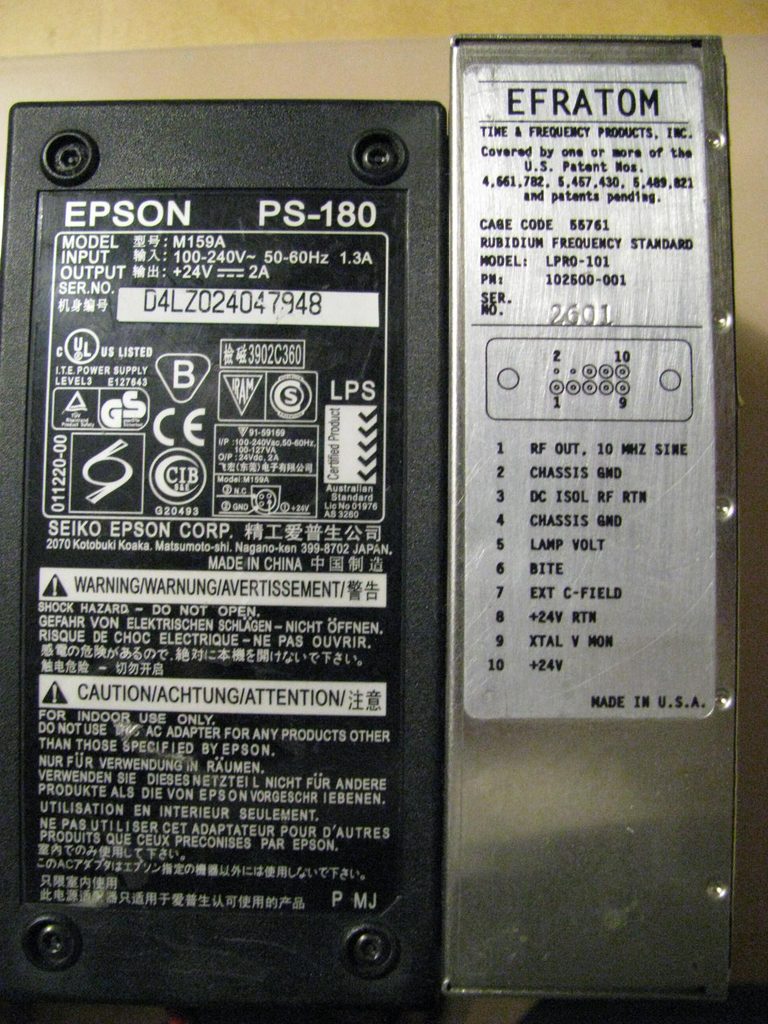
When these units first started appearing on the surplus market after the 2G/3G telecom decommissioning around 2010–2013, they were practically being thrown away. You could pick them up on eBay for $20–$40, and I bought three or four at the time. So somewhere in storage I still have two or three more. The last one I had running was the LPRO‑101 shown in the photo, but that was several years ago, so I’m not sure whether it will still fire up. The EFRATOM LPRO‑101 is one of the simpler rubidium modules because it only needs a single 24 V supply. It doesn’t provide a true lock output, however misleading that can wind up being;
Instead, a lamp‑voltage monitor is used as the practical indicator. The lamp voltage starts high—typically around 12 V—and then settles to roughly 7 V once the lamp reaches operating temperature. That stabilized value is generally treated as the “locked” state, although, as I’ve explained elsewhere, it still isn’t a guarantee of actual rubidium phase synchronization.
Best of luck on your current projects.–
Adrian